


The best time to visit Vietnam is November to April, when the country enjoys dry weather, comfortable temperatures, and minimal rainfall across all regions. For beaches, aim for March–May in the south or February–May in central Vietnam. For Sapa trekking, September–November offers golden rice terraces. The worst time to visit Vietnam is July–August — peak typhoon and monsoon season.
Vietnam stretches over 1,650 km from north to south, straddling two distinct monsoon systems. This means there is no single “best time to visit Vietnam” that applies to the entire country — different regions shine in different months. This month-by-month guide breaks down Vietnam travel season by region, activity, and budget so you can plan the perfect trip.
What this guide covers:
- Vietnam weather by month and region
- The best and worst months to visit
- Peak vs. low tourist season — costs, crowds, and deals
- When to visit for beaches, trekking, culture, and festivals
- Regional breakdown: North, Central, and South Vietnam
1. Vietnam Weather Overview: Two Monsoons, One Country
Vietnam’s climate is shaped by two opposing monsoon systems. Understanding this is the key to knowing when to visit Vietnam:
Northeast Monsoon (October to April)
- Brings dry, cooler weather to northern and central Vietnam
- South Vietnam stays warm and sunny throughout
- Peak tourist season: November to February
Southwest Monsoon (May to September)
- Brings heavy rain and typhoon risk to central and northern Vietnam
- South Vietnam experiences its own wet season, but storms are less severe
- Low season: June to August — cheaper prices but wetter conditions
2. Vietnam Weather by Month — Full Overview Table
Use this table to quickly find the best travel month for your chosen destination:
| Month | North Vietnam | Central Vietnam | South Vietnam | Rating |
|---|---|---|---|---|
| January | Cool & dry | Cool & dry | Warm & dry | ★★★★★ |
| February | Cool & dry | Cool & dry | Warm & dry | ★★★★★ |
| March | Warm & dry | Warm & dry | Hot & dry | ★★★★★ |
| April | Warm & dry | Hot & dry | Hot & dry | ★★★★★ |
| May | Hot, humid | Hot, rainy | Hot & wet | ★★☆☆☆ |
| June | Hot, humid | Hot, rainy | Hot & wet | ★★☆☆☆ |
| July | Hot, humid | Heavy rain | Hot & wet | ★☆☆☆☆ |
| August | Hot, humid | Heavy rain | Hot & wet | ★☆☆☆☆ |
| September | Mild rains | Rainy / flood risk | Less rain | ★★★☆☆ |
| October | Cool & dry | Rainy / flood risk | Warm & dry | ★★★☆☆ |
| November | Cool & dry | Cooler, dry | Warm & dry | ★★★★★ |
| December | Cold | Cool & dry | Warm & dry | ★★★★★ |
★★★★★ = Excellent | ★★★☆☆ = Shoulder season | ★★☆☆☆ = Challenging | ★☆☆☆☆ = Avoid
3. Month-by-Month Guide to Vietnam
January — Peak Season
Best for: Whole-country travel, Tet preparation, beaches in Phu Quoc and Da Nang
January is one of the best times to visit Vietnam. The north is cool and dry (15–20°C in Hanoi), central Vietnam is pleasant, and the south is warm (28–32°C). Vietnam Tet festival often falls in late January or early February — book accommodation months in advance. Note that many businesses close for up to a week during Tet celebrations.
- Weather: Cool & dry north | Mild central | Hot & dry south
- Crowds: Very high — peak season
- Prices: High. Book early, especially around Tet
February — Peak Season / Tet Festival
Best for: Cultural experiences, Tet celebrations, Hoi An lantern festival
February often brings the Vietnam Tet festival — the country’s biggest celebration. Streets are decorated with flowers and lights, making it a magical time to travel if you plan ahead. Weather remains excellent across all regions: Hanoi 17–22°C, Da Nang 20–25°C, Ho Chi Minh City 28–33°C.
- Weather: Excellent across all regions
- Crowds: Very high — especially during Tet week
- Prices: Highest of the year — book 3 months ahead
March & April — Best Overall Months
Best for: First-time visitors, beach holidays, Mekong Delta, Ha Long Bay
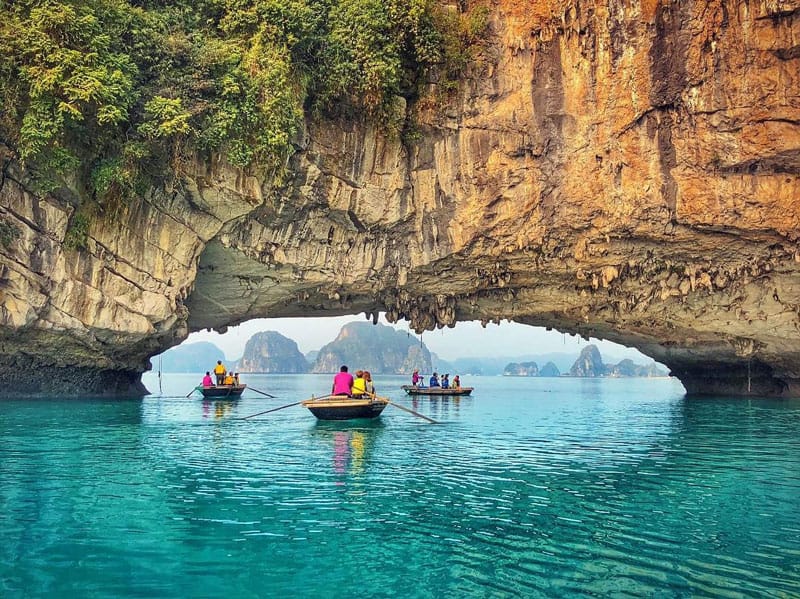
March and April are widely considered the best time to visit Vietnam for first-time travelers. Temperatures rise pleasantly, rainfall is minimal, and the country is at its most accessible before summer heat arrives. Da Nang and Hoi An beaches are at their absolute best. Ha Long Bay cruises enjoy calm seas and clear visibility.
- Weather: Warm & sunny everywhere — ideal for outdoor activities
- Crowds: Moderate — fewer tourists than the Tet season
- Prices: Mid-range — better deals than Jan–Feb
May — Shoulder Season
Best for: Budget travelers, Phu Quoc, South Vietnam coast
May marks the beginning of Vietnam rainy season in the north and center. However, southern Vietnam — including Phu Quoc island — remains an excellent destination. Crowds thin out and prices drop noticeably, making May a great value month for budget travelers who are flexible.
- Weather: Hot & rainy north | Getting wet in center | Still fine in south
- Crowds: Low — ideal for avoiding tourism congestion
- Prices: Shoulder — 20–30% cheaper than peak
June, July & August — Low Season (Avoid Central & North)
Best for: South Vietnam, budget deals, quiet escapes in Phu Quoc
These are the worst months to visit Vietnam if you plan to visit the north or center. Typhoon season begins, flooding is possible in central Vietnam, and the north is oppressively hot and humid. However, southern Vietnam — Ho Chi Minh City and the Mekong Delta — remains manageable, and prices hit their annual low.
- Weather: Hot & very wet in north and center | Wet but manageable in south
- Crowds: Very low — mostly domestic Vietnamese tourists
- Prices: Lowest of the year — up to 40% off peak rates
September — Shoulder Season / Sapa Golden Season
Best for: Sapa rice terraces, north Vietnam, budget travel
September brings the breathtaking golden rice terrace harvest season in Sapa and Mu Cang Chai — one of Vietnam’s most photographed landscapes. Central Vietnam still faces typhoon risk, but the north begins to dry out. September is an excellent shoulder-season pick for travelers focused on trekking in northern Vietnam.

- Weather: Mild rains north | Still risky center | Drying out in south
- Crowds: Low-moderate
- Prices: Good value — shoulder season rates
October — Best Month for North Vietnam
Best for: Hanoi, Sapa, Ha Long Bay, autumn landscapes
October is arguably the best time to visit Hanoi and northern Vietnam. Temperatures are ideal (22–26°C), landscapes are lush and green after the monsoon, and peak season crowds have not yet arrived. Important note: central Vietnam — Hoi An, Da Nang, Hue — can still experience serious flooding in October. Always check local forecasts before booking.
- Weather: Beautiful in north | Still rainy in center | Great in south
- Crowds: Moderate — rising toward peak season
- Prices: Mid-range — excellent value before peak
November & December — Peak Season Begins
Best for: All regions, Ha Long Bay cruises, Hoi An, Phu Quoc, whole-country itineraries
November and December mark the beginning of Vietnam’s prime travel season. Hanoi cools to a comfortable 18–24°C. Central Vietnam dries out and becomes beautiful again. The south remains warm and sunny. This is the ideal window for a full north-to-south Vietnam itinerary — the country is firing on all cylinders.
- Weather: Cool & dry north | Dry & pleasant center | Warm south
- Crowds: High and rising — book accommodation in advance
- Prices: Rising toward peak — book 6–8 weeks ahead
4. Best Time to Visit Vietnam by Region
Best Time to Visit Hanoi & North Vietnam
The best time to visit Hanoi is October to April. The city experiences a genuine four-season climate unlike anywhere else in Vietnam. Spring (March–April) is warm and pleasant. Autumn (October–November) offers crisp, comfortable weather with stunning foliage across the valleys. Avoid July–August when heat and humidity are at their peak.
- Ideal months: October, November, March, April
- Avoid: July and August (heat, humidity, heavy rain)
- Special highlight: September–October for Sapa golden rice terraces
Best Time to Visit Hoi An & Central Vietnam
Central Vietnam has the most complex weather pattern in the country. The best time to visit Hoi An is February to May — dry, warm, and before the summer heat sets in. October and November bring heavy rainfall and occasional flooding risk, but the famous Lantern Festival still draws visitors who plan carefully around weather forecasts.
- Ideal months: February, March, April, May
- Avoid: October–November (flooding risk), July–August (typhoon season)
- Hoi An Lantern Festival: Full moon of each lunar month — best experienced February–April
Best Time to Visit Ho Chi Minh City & South Vietnam
South Vietnam is the most weather-stable region in the country. The dry season (November to April) is ideal, but even the wet season (May to October) typically sees rain only in short afternoon showers. Ho Chi Minh City and the Mekong Delta are accessible and enjoyable year-round. Phu Quoc is best visited November to March for calm, crystal-clear waters.
- Ideal months: November through April for Phu Quoc beaches
- Year-round viable: Ho Chi Minh City, Mekong Delta
- Avoid: June–August for Phu Quoc (rougher seas, reduced visibility)
5. Best Time to Visit Vietnam by Activity
Best Time for Beach Holidays in Vietnam
Vietnam has over 3,000 km of coastline — timing your beach trip to the right coast is everything.
- Da Nang & Hoi An beaches: February to May (before summer heat and typhoons)
- Phu Quoc: November to March (clear water, gentle waves, stunning sunsets)
- Nha Trang: February to September (one of Vietnam’s longest dry windows)
- Ha Long Bay: October to April (calm seas, clear skies, best cruise conditions)
Best Time for Sapa Trekking
Sapa trekking best season depends on what you want to see. September to November offers the famous golden rice terraces and harvest season — the most photographed landscapes in all of Vietnam. March to May brings blooming flowers and mild temperatures ideal for longer multi-day treks. Avoid December to February if you dislike cold, fog, and slippery trails.

- Rice terrace season: September–October (harvest, golden fields)
- Flower season: March–May (rhododendrons and cherry blossoms in bloom)
- Avoid: June–August (heavy rain, extremely slippery trails, limited visibility)
Best Time for Cultural Festivals
- Tet — Lunar New Year: January or February — Vietnam’s most important celebration
- Hoi An Lantern Festival: Every full moon night — especially beautiful February to April
- Hue Festival: April–May (biennial international cultural festival, even years)
- Mid-Autumn Festival: September–October — lanterns, mooncakes, children’s parades
6. Peak Season vs. Low Season — Costs & Crowds
Peak Season (November to April)
- Best weather across all three regions of Vietnam
- Highest hotel and flight prices — book 2–3 months in advance
- Popular sites (Ha Long Bay, Hoi An, Sapa) get very crowded
- Tet (Jan–Feb) causes nationwide business closures — plan carefully around it
Low Season (May to September)
- 30–40% lower hotel and tour prices compared to peak
- Far fewer tourists at all major sights
- Afternoon rain showers — often clears up beautifully for sunsets
- South Vietnam (Mekong Delta, HCMC) remains largely viable
- Avoid central Vietnam completely during typhoon season
7. Frequently Asked Questions
What is the best month to visit Vietnam?
March and April are the best months to visit Vietnam for most travelers. Weather is excellent across all three regions — warm but not oppressive, minimal rainfall, and lush landscapes. Crowds and prices are lower than the January–February Tet peak, making it the sweet spot of the travel calendar.
Is Vietnam good to visit in December?
Yes — December is one of the best months to visit Vietnam. The north is cool and clear, central Vietnam has dried out after the October flood season, and the south is in full peak season sunshine. It is ideal for a complete north-to-south Vietnam itinerary and popular with international travelers over the holiday period.
What is the worst time to visit Vietnam?
The worst time to visit Vietnam is July and August, especially for central and northern regions. Typhoon season peaks, central Vietnam (Hoi An, Da Nang, Hue) can experience dangerous flooding, and the north is oppressively hot and humid. If you must travel during this period, restrict your plans to southern Vietnam — or skip Vietnam entirely in favor of a drier destination.
Should I visit Vietnam during Tet?
Visiting during Vietnam Tet festival is a unique and unforgettable cultural experience — streets are covered in flowers, fireworks fill the sky, and the celebrations are extraordinary. However, many restaurants, shops, and tourist attractions close for 3–7 days, transport is fully booked weeks in advance, and prices are at their highest. Only recommended for experienced Southeast Asia travelers who plan 4–6 months ahead.
Is Vietnam safe to visit during typhoon season?
Southern Vietnam (Ho Chi Minh City, Mekong Delta) is generally safe year-round. Central Vietnam (Da Nang, Hoi An, Hue) faces real typhoon risk from October to December, with additional serious flooding risk in October. Always monitor local weather forecasts and purchase comprehensive travel insurance that covers extreme weather events before your trip.
Conclusion: When Is the Best Time to Visit Vietnam?
The best time to visit Vietnam is the dry season from November to April — but the ideal month within that window depends on your destination, planned activities, and budget. Here is a quick summary to guide your planning:
- Best overall months: March, April, November, December
- Best for beaches: February–May (Da Nang) | November–March (Phu Quoc)
- Best for trekking: September–November (Sapa harvest season)
- Best for budget: May and October (shoulder season sweet spots)
- Worst months: July–August (typhoons, flooding, extreme heat)
- Best for Tet: January–February (plan 3–4 months ahead minimum)
Vietnam rewards travelers who plan around its climate. Whether you are chasing golden rice terraces in Sapa, turquoise waters in Phu Quoc, or lantern-lit evenings in Hoi An — there is a perfect time to visit, and now you know exactly when it is.
0 Comment